

Reflections from Week 2 in Cape Town – Churchill Fellowship
I’m waking up in sunny Cape Town, nearing the end of my second week on this Churchill Fellowship journey. I’m here continuing my research into the Neurology of Power™, a long-term inquiry into where power resides in the brain and body – and how that knowledge can help build a world where everyone thrives.
I define power as the ability to influence how others think, feel, or behave, whether they want you to or not, and the ability to have agency over yourself. It’s not just about authority or dominance; it’s also about presence, choice, clarity, and trust.
This week has been rich and full: delivering a powerful workshop, completing our second interview with the brilliant Dr. Melike Fourie and Charne Matthews, and having deep, generous conversations across institutions and communities. And through all of it, three themes keep rising: asking for what you want, definitions, and choice.
1. Choice and Dehumanisation
Dr. Melike Fourie’s work on dehumanisation offers a powerful lens. She identifies two types:
– Mechanistic dehumanisation: where people are treated like objects – emotionless, replaceable tools.
– Animalistic dehumanisation: where people are seen as irrational, uncivilised, or lacking control.
In both, people are stripped of agency and humanity. And that’s where choice becomes critical.
Organisational power often operates invisibly, but when people lack a genuine sense of choice, their humanity is diminished in the workplace. Who gets to choose? Who gets to say no? Who gets to change their mind?
If work is where many spend most of their waking hours, but have no meaningful choice in how they show up, then what are we building?
2. The Power of Definitions
This week I also had a brilliant conversation with Judith Registre (Systems Design Strategist), where we unpacked the definitions we use. I define power in a particular way – but what am I really talking about? Is it power? Is it control? Is it choice?
Getting clear on definitions isn’t about rigidity, it’s about shared understanding. Our bodies often know what’s happening before our brains can name it. Definitions give us language, and language gives us power.
That became clear again in our workshop this week, where we offered people a vocabulary for experiences they’ve felt but never named, especially when they’ve been told their feelings weren’t valid. Neuroscience gave a kind of validation people could hold onto. It turned gaslight into spotlight, power and maybe at some point ultimately choice.
3. Asking for What You Want
As a Black woman, I’ve spent years navigating the tension between being “grateful” and asking for what I want. This week reminded me: when I ask, it shows up – not always in the form I expect, but it arrives.
When planning this trip, I asked for space to explore organisational dynamics and space to explore myself. I asked to meet people who could push my thinking. I asked for sunshine, good food, and depth.
And here I am. Sitting with Melike’s research that spans the individual, the group, the society, and the organisation. Meeting thinkers, artists, scientists and activists who reflect my questions back with sharper insight.
I realise now: I didn’t just get what I wanted. I got what I needed.
So, what’s the takeaway?
At Alleyne&, we say that culture + strategy = sustainable brilliance. But brilliance requires more than vision and values. It demands real power-sharing. It demands clarity in language. It demands environments where people have real choice.
So here’s the provocation:
– What power do you hold in your organisation?
– How much choice do the people around you have?
– And how does that affect your collective ability to create sustainable, impactful, profitable culture?
Power isn’t a dirty word. It’s a resource. And like all resources, it needs to be consciously stewarded.
If you want sustainable brilliance, you’ll need to ask better questions about how power moves – and whether people have the language, choice, and courage to shape it.
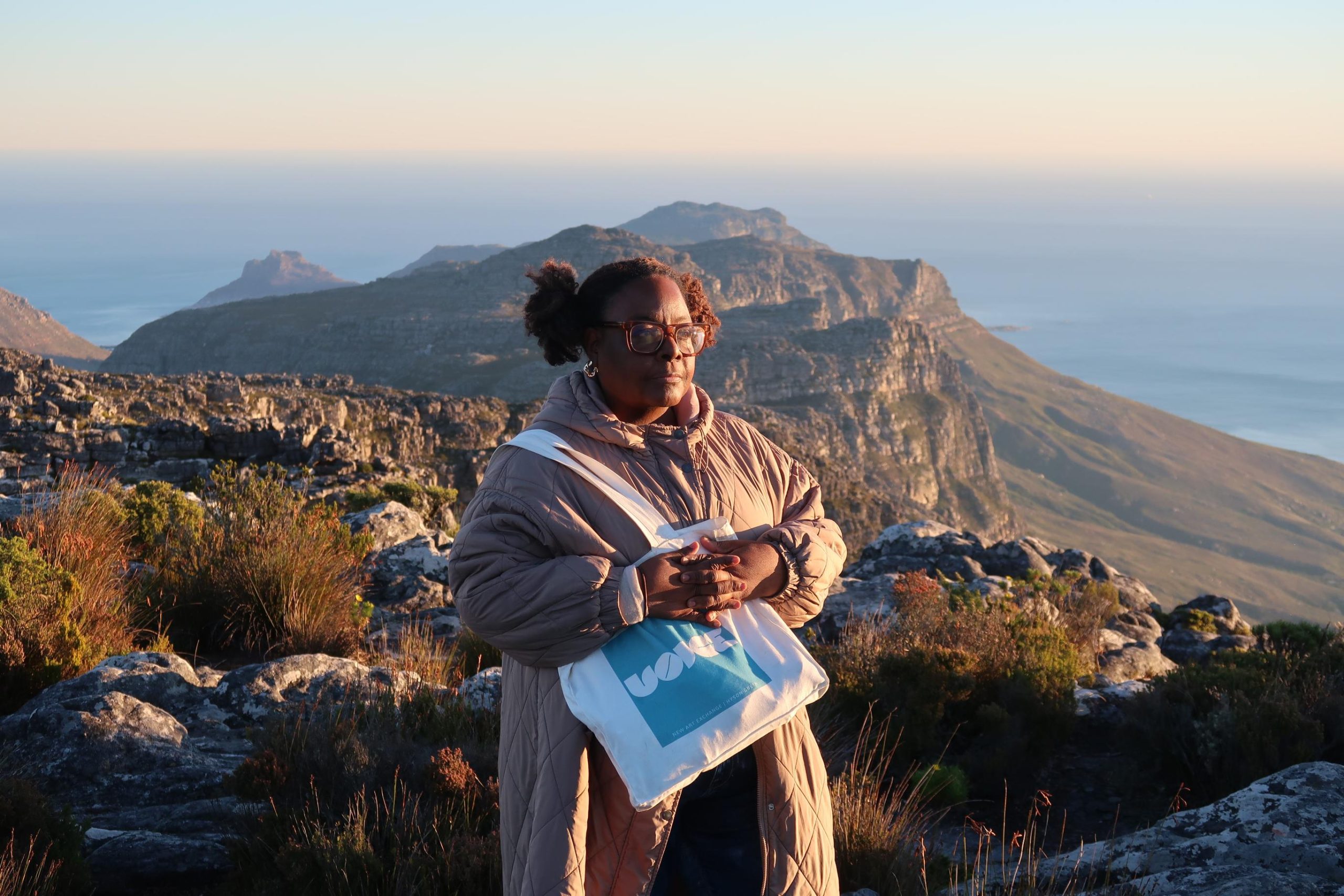
P.S. The photo is of me (which is a shift in itself) on the top of table mountain in Cape Town, proudly sporting my VOICE assembly bag, because I will always shout about the power of New Art Exchange’s VOICE Assembly.